
When you’re choosing a checkout and subscription platform, features matter—but pricing clarity matters even more.
Because here’s what usually happens:
You start on a “cheap plan”…
then you scale…
then you discover the platform charges extra for:
- subscription billing
- reporting
- integrations
- affiliate tools
- team access
- higher volume
- better support
So the real question isn’t “How much does it cost today?”
It’s:
How much will this platform cost when you’re doing real volume—and can you predict your expenses as you grow?
That’s why this PayKickstart 2.0 pricing guide exists.
In this article, you’ll learn:
- How PayKickstart 2.0 pricing works
- What’s included in each plan
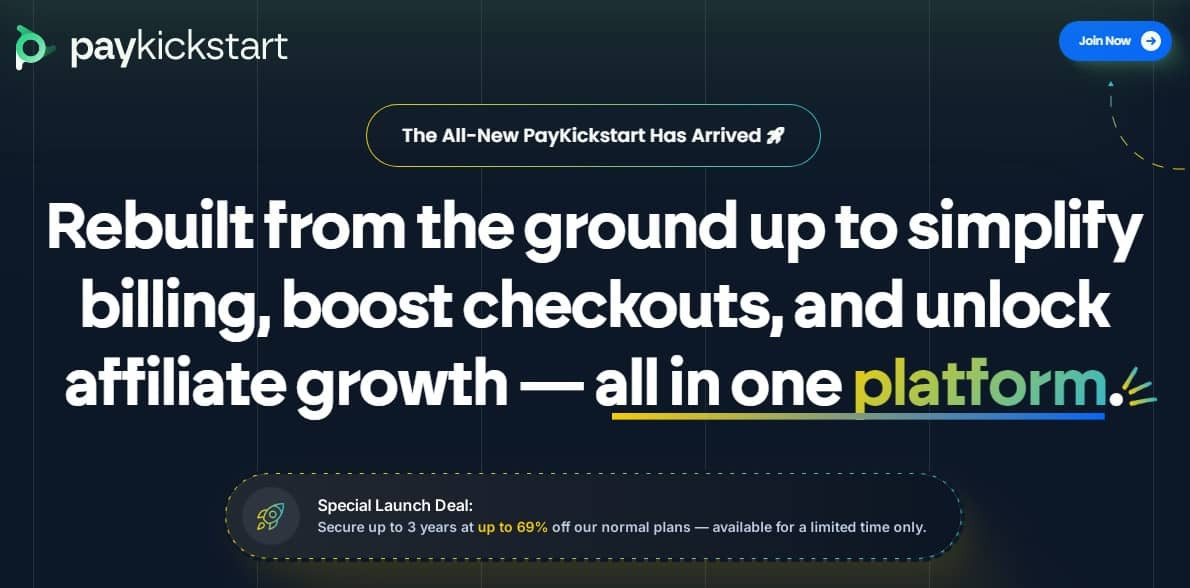
- What a “Price Lock” means (1–3 years)
- How processing fees impact your profit
- Which plan is best for your business type
If you haven’t read the full platform overview yet, start here first:
➡️ PayKickstart 2.0 Review (2026): Features, Pros & Cons + Verdict
PayKickstart 2.0 Pricing: Quick Snapshot
Pricing Model: Scales based on business volume (revenue-based / tiered structure)
Price Lock Options: 1-year, 2-year, or 3-year lock
Core Promise: All major features included (less feature-gating vs typical SaaS carts)
Best For: Businesses that want predictable costs while scaling
How PayKickstart 2.0 Pricing Works (Simple Explanation)
PayKickstart 2.0 does not follow the typical “Starter / Pro / Enterprise” model where features get locked behind expensive upgrades.
Instead, the platform is structured to price based on business size and processing volume, meaning:
- Smaller businesses can start without paying enterprise-level costs
- Larger businesses can scale without switching platforms
- Your plan cost aligns with how much the system is managing for you
This is a logical direction for a revenue platform because PayKickstart is responsible for a lot more than “checkout buttons.”
It’s running:
- subscription lifecycles
- rebill recovery
- affiliate payouts
- reporting
- fraud protection
- integrations and automation triggers
What’s Included in PayKickstart 2.0 Plans?
This is where PayKickstart 2.0 pricing becomes attractive for serious businesses.
Many competing platforms charge extra for features that most growing businesses eventually need.
PayKickstart 2.0 positions itself as:
✅ “All features included from day one.”
✅ “No hidden upgrades just to unlock core tools.”
While plan tiers can vary based on usage or business volume, the platform’s pricing approach focuses on feature access transparency.
You typically get access to:
- Checkout builder (templates + embedded + popup checkout)
- One-click upsells and order bumps
- Subscription billing tools (trials, upgrades, proration)
- Dunning / failed payment recovery
- Affiliate management center
- PayKickstart Wallet payout system
- Real-time reporting and analytics
- Native integrations + Zapier
- Security and compliance layers
- Mobile app access
If you want the complete feature breakdown, see the main review:
➡️ PayKickstart 2.0 Review (2026): Full Feature Breakdown
What Is the PayKickstart 2.0 “Price Lock”?
The Price Lock is one of the most important parts of PayKickstart 2.0 pricing—and it’s also what makes this platform appealing for fast-growth businesses.
Instead of locking you into unpredictable pricing increases year after year, PayKickstart allows you to lock your plan pricing for:
- 1 year
- 2 years
- 3 years
Why the Price Lock matters
When your business grows, most platforms increase costs in at least one of these ways:
- higher monthly plan cost
- higher platform fees
- feature add-ons
- mandatory upgrades for reporting or integrations
- “enterprise” pricing surprises
Price lock is designed to protect you from that instability.
So if you’re planning to grow (more customers, more affiliates, higher MRR), locking your cost upfront can make your operating expenses far more predictable.
Which Price Lock Should You Choose?
Here’s a practical way to decide.
✅ 1-Year Price Lock (Best for testing)
Choose this if:
- You’re new to PayKickstart
- You want flexibility
- You’re still validating product-market fit
- You don’t know your scale yet
✅ 2-Year Price Lock (Best balance)
Choose this if:
- You’re already making consistent sales
- You want cost stability
- You plan to scale offers or run launches regularly
✅ 3-Year Price Lock (Best for aggressive scaling)
Choose this if:
- You expect rapid growth
- You rely heavily on subscriptions (MRR)
- You run affiliate-driven launches
- You want maximum protection against future price increases
The businesses who benefit most from long locks are subscription-based brands, because the platform becomes part of your revenue backbone.
Are There Any Hidden Fees With PayKickstart 2.0?
This is one of the first questions experienced marketers ask—and it’s the right question.
With most platforms, you might pay:
- monthly subscription fee
- Plus platform fee per transaction
- plus payment processor fees
- Plus extra for affiliates
- Plus extra for subscriptions
- plus extra for “advanced” reporting
PayKickstart 2.0 is generally structured to reduce that kind of “death by a thousand upgrades” model.
That said, your total cost will still depend on:
- your plan level (business volume)
- your payment processor rates
- optional processing upgrades like Connect
Let’s break down the part that affects your profit the most:
PayKickstart 2.0 Processing Fees: Standard vs “Connect”
Payment processing fees are the silent profit killer.
You can grow your business revenue… and still watch your profit shrink if your processing stack is inefficient.
Most businesses pay standard processing rates around:
Industry standard
2.9% + $0.30 per transaction
PayKickstart promotes an option called:
PayKickstart Connect
Rates as low as 2.3% + $0.15 per transaction
(availability depends on region, eligibility, and offer terms)
Why this matters (real math)
At low volume, you won’t notice it much.
At scale, you absolutely will.
If you process $1,000,000 per year:
- Even small percentage differences become thousands in retained profit
- You can fund ads, content, or team growth using “saved margin”
If your business runs on high-frequency transactions (subscriptions or mid-ticket offers), optimizing processing rates becomes a real competitive advantage.
What’s the Best PayKickstart 2.0 Plan for Your Business?
Here’s the simplest way to choose your plan based on what you’re selling.
1) Best for Digital Product Creators
If you sell:
- courses
- templates
- eBooks
- software
- coaching programs
You’ll want:
- checkout templates
- order bumps + upsells
- affiliate tracking
- cart recovery
✅ Recommendation: Choose a plan that supports growth + lock at least 1–2 years if you run launches.
2) Best for Subscription / Membership Businesses
If you sell:
- monthly memberships
- communities
- content libraries
- subscription coaching
- recurring bundles
You need:
- subscription billing management
- trials
- failed payment recovery (dunning)
- retention workflows
✅ Recommendation: Choose a plan built for subscription volume and strongly consider the 2–3 year lock.
Also read:
➡️ PayKickstart 2.0 Dunning System: Recover Failed Payments & Reduce Churn
3) Best for SaaS Founders
If you run SaaS, you need advanced logic:
- free trials
- upgrades/downgrades
- proration
- usage-based billing
- API and integrations
- retention + analytics
✅ Recommendation: Go for the plan and lock duration that gives long-term stability—because switching SaaS billing platforms later is painful.
Read:
➡️ PayKickstart 2.0 for SaaS: Trials, Proration & Usage Billing Explained
4) Best for Affiliate-Driven Vendors
If you scale through affiliates, the true cost isn’t just plan pricing—it’s operational overhead.
You want:
- reliable tracking
- fast payouts
- vendor protection
- automated workflow
✅ Recommendation: Use PayKickstart Wallet as a core advantage and lock pricing if you run frequent promos.
Read:
➡️ PayKickstart Wallet Review: Automated Affiliate Payouts + Trust Score
Is PayKickstart 2.0 Worth the Price?
This is the wrong question for most businesses.
The better question is:
Does PayKickstart 2.0 pay for itself?
If it helps you do even one of these consistently, the platform becomes a profit engine:
- increase conversion rates by improving checkout flow
- increase AOV through upsells and order bumps
- recover failed rebills automatically
- reduce churn without manual chasing
- simplify affiliate payouts so you can scale partnerships faster
Many tools are an expense.
A revenue platform is different—because it directly impacts how much you keep.
When PayKickstart 2.0 Pricing Might NOT Make Sense
PayKickstart 2.0 is not a “lightweight cart.”
So if you are:
- selling one product occasionally
- not running subscriptions
- not using upsells
- not using affiliates
- not scaling campaigns
…then a simpler payment setup might be enough.
But if you’re building a business you plan to scale, PayKickstart’s pricing becomes easier to justify because it replaces multiple tools.
Frequently Asked Questions (PayKickstart 2.0 Pricing)
Does PayKickstart 2.0 have a free trial?
This depends on the current offer and pricing structure. Some launch periods include onboarding support and promotional terms. Always check the official pricing page.
Do I need to pay extra for affiliate features?
PayKickstart includes affiliate management as a core feature, which is a major advantage compared to carts that require third-party affiliate tracking tools.
Do I have to lock pricing for 3 years?
No. Price lock is optional, and you can choose a shorter lock if you want flexibility.
Does PayKickstart charge per transaction?
Your payment processor will charge processing fees. Your PayKickstart plan cost is separate from processor fees and depends on your plan structure and usage level.
Can I switch from another platform?
Yes. PayKickstart supports migrations, and some offers include migration assistance.
Final Verdict: Best Way to Approach PayKickstart 2.0 Pricing
Here’s the cleanest strategy:
✅ If you’re testing the platform: 1-year lock
✅ If you’re already selling consistently: 2-year lock
✅ If you’re scaling subscriptions + affiliates: 3-year lock
PayKickstart 2.0 pricing is structured for businesses that want:
- predictable expenses
- fewer feature upgrades
- stronger revenue retention
- better scaling infrastructure
If you’re serious about recurring revenue, partner growth, or building a long-term digital business, PayKickstart 2.0 is worth evaluating as a foundational system.


